
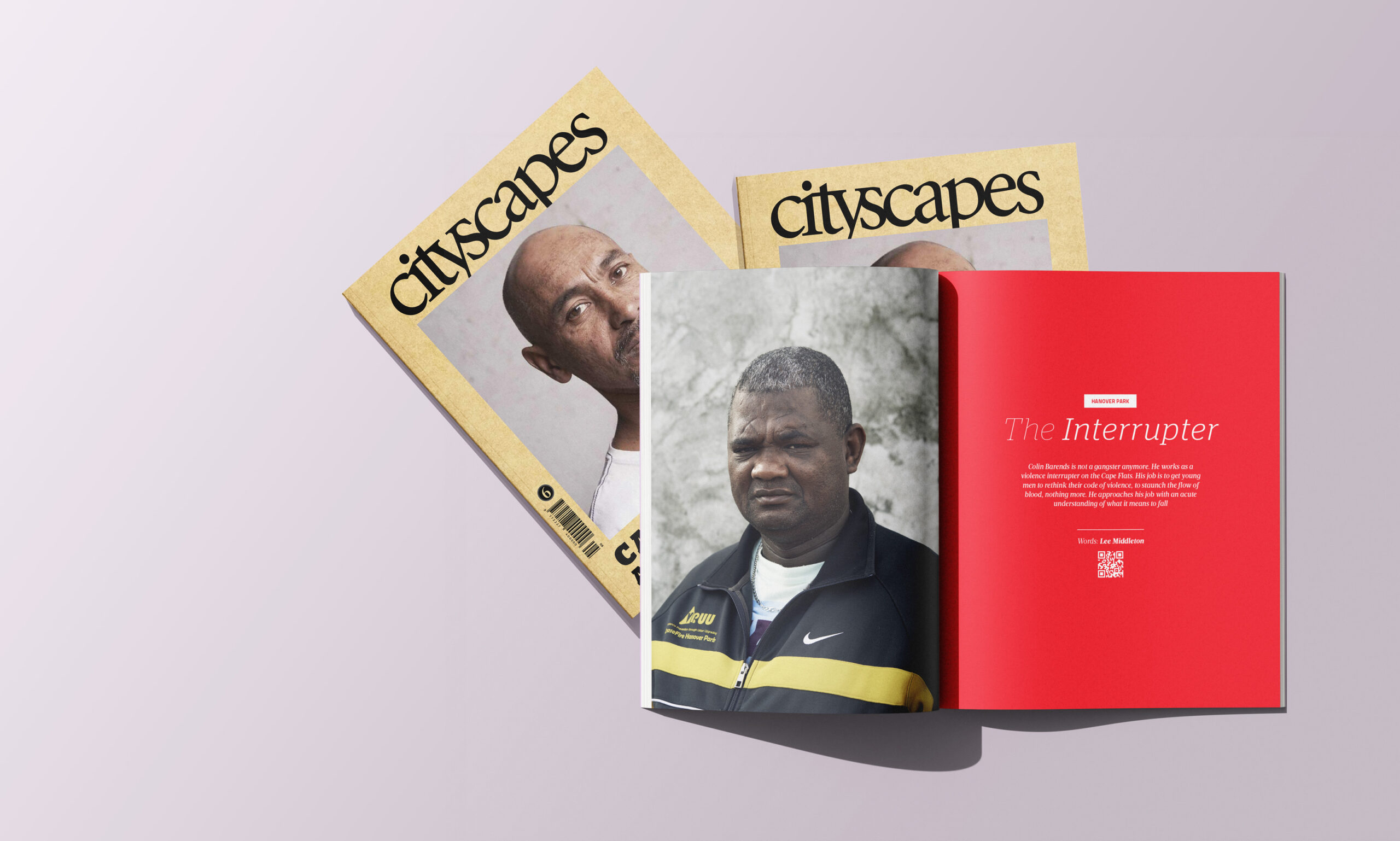
#6
Cape Town: A City Desired
Issue #6 of Cityscapes Magazine accompanied the sprawling exhibition of the same title. It presented narrative profiles of 10 Cape Town residents, each reflecting a different way of living, while tracing where their lives intersected and how their aspirations and visions for the city’s future overlap.
One city, ten people, ten ideas. This, in a nutshell, is what this issue is about.
In a departure from past issues of this magazine, we pause to look at one city in detail. The city: Cape Town, home to nearly 4 million inhabitants (including the people who make this object you’re reading). But four million is just a number. In a bid to think more deeply and honestly about this city as a collective, we decided to engage in something akin to biography writing. This issue tells the stories of ten Capetonians, women and men whose embodied experience of place maps key coordinates of this sprawling and starkly divided city. Women and men whose lives are defined by the temporal present, but also have something to do with historical time, a thing in which all South African cities are implicated.
Our protagonists: a school principal, architect, environmental officer, psychiatrist, urban farmer, transport entrepreneur, violence councillor, food seller, domestic worker (who also works as a trade unionist) and twin brothers who collaborate to make art. A warning: a job is not a synonym for a life, even if a job can be an expression of a life well lived. The ten Capetonians who opened their lives to prolonged enquiry by our team of journalists are also sons and daughters, mothers and fathers, voters and consumers, citizens and survivors, rolemodels and fellow travellers. It is important to recognise them as such, and not simply regard them as ciphers animating a theme.
This issue was not conceived in a vacuum. It can be read as an in-depth “city report”, something we have committed ourselves to since our first issue in 2011. More formally, this object you are engaging is an extension of an exhibition project curated by Tau Tavengwa and Edgar Pieterse, with Caroline Sohie. In late October 2014, the exhibition City Desired opened at Cape Town’s old city hall. Drawing on a range of media platforms—including photography, film and various interactive tools—the exhibition looked at the fine grain of a city awkwardly negotiating change. It achieved this with the help of ten people: Colin Barends, twin brothers Hasan and Husain Essop, Gita Goven, Luzann Isaacs, Alfonso Louw, Thabang Molefe, Christina Mtandana, John Parker, Mina Plaatjies, Kieyaam Ryklief—our ten protagonists in this issue.
While strongly focused on biography, City Desired aimed to offer its public a full-spectrum view of Cape Town’s many and complex challenges. Drawing on extensive research undertaken by the African Centre for City’s Citylab research programme, as well as research from within the University of Cape Town and other institutions, the exhibition was a corrective to the ambrosial descriptions of Cape Town as a global holiday and creative arts destination. Yes, Cape Town is chocolate-box pretty and has some smart artists and designers, but it is also undershot by inescapable contradictions and tensions.
Similar to most South African cities, a special kind of neo-apartheid dominates the form and dynamics of Cape Town’s built environment. Its residential divisions, which are the cumulative product of colonial and apartheid determinism, and present-day governmental inefficiencies, are at the root of other systemic inequalities, in education, health and security. While our protagonists speak of these things, they also talk of getting on with the business of life, love and aspiration. It is a way of understanding and negotiating the city—a place grounded in the real, but also highly abstract—that informs the way in which this issue has been planned and executed. One city, many atomised ways of being.
Good reading…
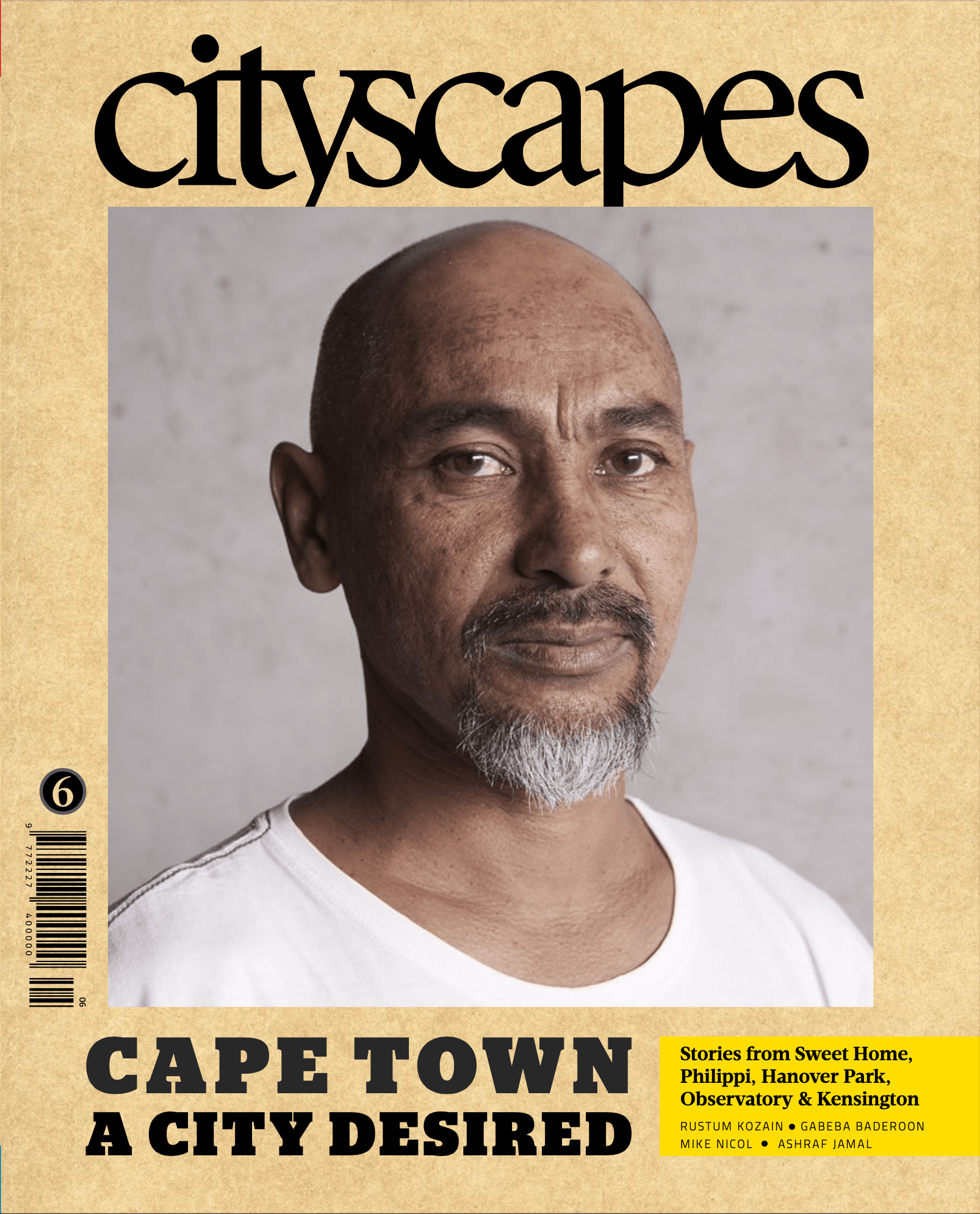
The Interrupter
Colin Barends gets young men to rethink their code of blood on the Cape Flats
The Architect
Gita Goven is an architect and humanist with an experience of hardship
The Transporter
Thabang Molefe is a former taxi driver transforming public transport in Cape Town
The Doppelgängers
Hasan and Husain Essop are twin brothers who make art about place and history
The Farmer
Kieyaam Ryklief is a farmer providing an overlooked source of food for the poor
The Healer
John Parker is a psychiatrist who works at a mental-health facility on the Cape Flats
The Principal
Alfonso Louw is the principal of a poor school in a working-class neighbourhood
The Entrepreneur
Christina Mtandana is businesswoman in need of fundamental infrastructure
The Unionist
Mina Plaatjies is a domestic worker, mother of two and trade unionist on a mission
The Conservationist
Luzann Isaacs manages a wetland park in a low-income urban area
Lwandle
On land occupations, housing and tweets
On geography, memory and history
Gabeba Baderoon
On water sensitive urban design
Neil Armitage
On carnivalesque music and farmworkers
Rustum Kozain
On yellow, design and city branding
Sean O’Toole
The people of Windermere, Langa, Nyanga, the Bo-Kaap and District Six
Bryan Heseltine
The dispersed landscapes of Athlone, Bo-Kaap, Hout Bay and District Six
Hasan & Husain Essop
Shadow of the Mountain
Life below Table Mountain remains strikingly balkanised and unequal
The Last Harpooner
Cyril Fernandez knew how to jump a southern right whale and kill it
Neil Armitage
Gabeba Baderoon
Brendon Bosworth
Hasan Essop
Husain Essop
Kim Gurney
Bryan Heseltine
Ashraf Jamal
Leonie Joubert
Rustum Kozain
Oliver Kruger
David Lurie
Lee Middleton
Mike Nicol
Bekezela Phakathi
David Schmidt
Sydelle Willow Smith
Janine Stephen

