

#5
Design will not save the city
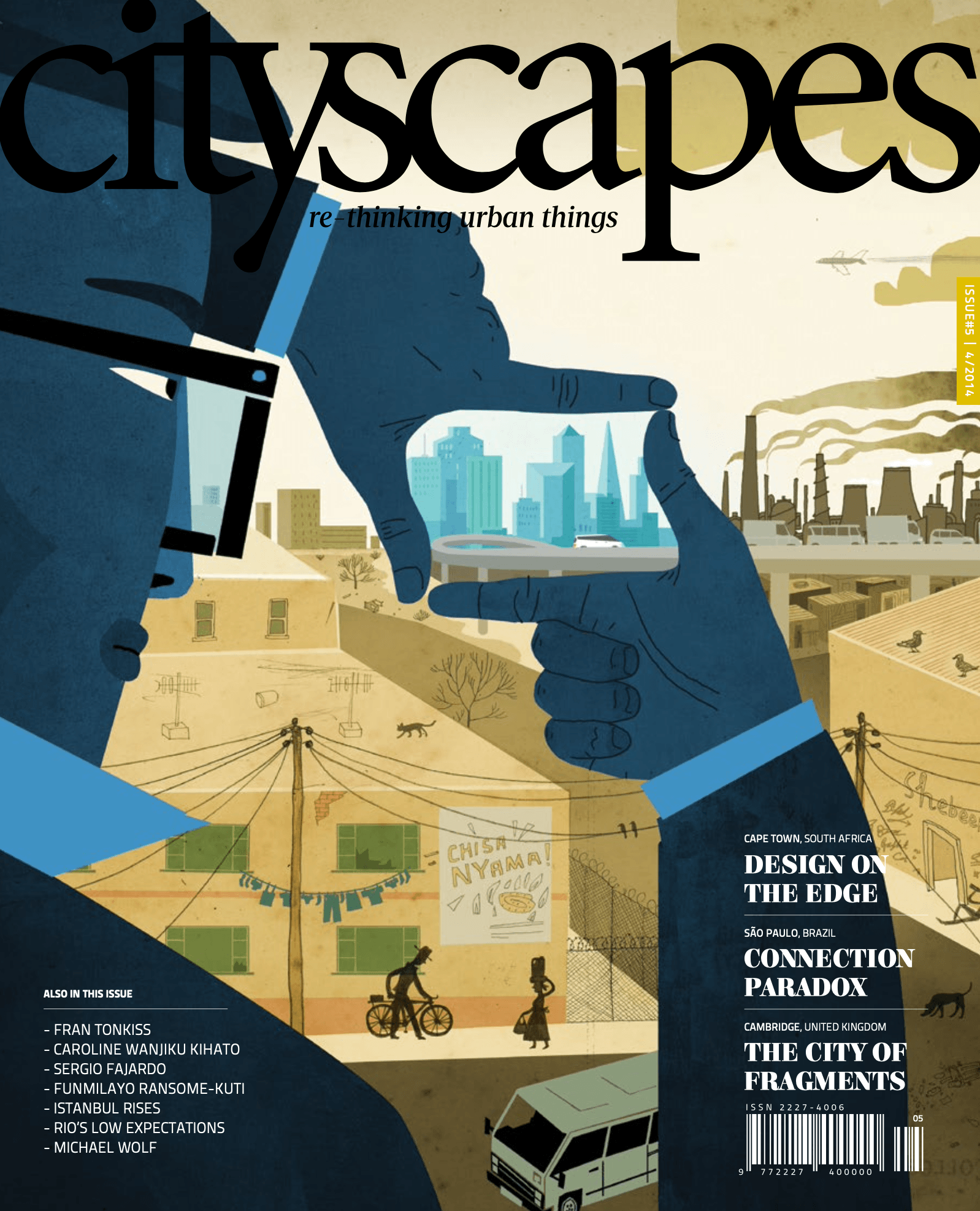
Issue #5 begins from a clear, optimistic position: design alone will not save the city—but citizens still can. Moving beyond debates about “good” or “bad” design, the magazine focuses on people as active agents reshaping urban life, particularly in the Global South.
We say this with optimism: design alone will not save the city. The Latin root of the word design speaks of mark making. Cities occupy and mark space in very real and physical terms. There is nothing ephemeral about a city, nor is there anything abstract about the consequences that flow from a poor design decision. While important in debating the outcome of urban interventions, qualitative assessments like “good” and “bad” are not the central focus of this issue. Rather, our interest is in the human agents and actors who, in their capacity as engaged citizens, are variously retooling the functions, capacities and possible outputs of the places they inhabit. Rather than blandly accept that the human will to do, act and mark—in a word, design—will right what is wrong in so many cities in the global south, we want you to pause. What are our cities’ key infrastructural and developmental problems? Who is addressing them? In what manner? With what ideological motivation? To whose exclusion? All questions unearthed by architectural critic Fernando Serapião in his recapitulation of social housing design in Brazil, a story that inaugurates our collaborative partnership with USP Cidades at the University of São Paulo. The city, an expression par excellence of citizenship, is however also increasingly abstracting the rights of city inhabitants. What, we foreground in this issue, is the role of the citizen in city making? Is it possible that instead of being passive recipients of design interventions, citizens can be co-authors or design partners? It is an idea explored in a conversation between urban thinkers Richard Sennett and Ash Amin. Responding to Amin’s query whether his recent thinking on cities proposes “a pluri-verse of 1001 hands doing the crafting”, Sennett responds: “One of the practicalities of this is that most people, because they’re not being pushed to develop their visual intelligence, create the most conservative designs—because that’s what people know.” Which prompts a further line of questioning.
What are the limits of co-opting citizens as design partners? Cities, after all, need to address a number of fundamental variables, many of which are beyond the ken of people diverted by real life dramas (school fees, groceries, credit limits, social media updates, even where to go to the toilet without fear or loss of dignity).
This issue of Cityscapes is built on the proposition that five deep logics pertain to cities everywhere: 1) form, 2) metabolic flows, 3) spatial dynamics, 4) choices by/of residents, and 5) political and fiscal stability.
There is a tendency, however, especially in Cape Town (where this magazine is crafted by a half-dozen hands), to reduce talk about design to objects, in the process excluding issues of process and institutions. As part of her lengthy walk across Cape Town, journalist Kim Gurney attended hearings of a commission of inquiry tasked with investigating complaints received by the provincial government about inefficiencies in three police stations in Khayelitsha. The testimonies of Khayelitsha residents, including Nontebeko Nduna, who is forced to do her ablutions on vacant land, point to systemic failings and incapacities that disfigure an entire community, an entire city, a whole country.
Good reading…
On the expanded meaning of design
Fran Tonkiss
On the architectural hubris
Vanessa Watson
On good urban design and collaboration
Miguel Bucalem
On foreign women in Johannesburg
Caroline Kihato
On the world’s newest county
Sean Christie
New Turkey is squaring off against its older, poorer self
Istanbul
After a period of growth, Brazil pauses and takes a breath
Rio de Janeiro
Mall culture after the terrorist attacks. The people vs. Kenya’s new constitution
Nairobi
An avant-garde shopping mall faces the wrecking ball
Cape Town
Ongoing protest action has politicised the toilet
Cape Town
We need to think about cities visually, says Richard Sennet
Cambridge, MA
Designing housing solutions for São Paulo’s poor
São Paulo
Sergio Fajardo on overcoming fear and building citizenship
Medellín
The car-less highway as a sign of protest, closure and crisis
Cape Town
Mohammad Rakibul Hasan on Bangladeshi park life
Dhaka
Filipe Branquinho on work and self-definition
Maputo
Dillon Marsh on trees that refuse to budge
Cape Town
Mark Lewis on a city reclaiming its pleasures
Mogadishu
Ash Amin
Filipe Branquinho
Miguel Luiz Bucalem
Sean Christie
Joseph Dana
Juan Diego Mejia
Sergio Fajardo
Kim Gurney
Flavie Halais
Mohammad Rakibul Hasan
Caroline Wanjiku Kihato
Patrick Latimer
Mark Lewis
Dillon Marsh
Tanya Pampalone
Justin Plunkett
Richard Sennett
Fernando Serapião
Fran Tonkiss
Hedley Twidle
Vanessa Watson
Michael Wolf

