
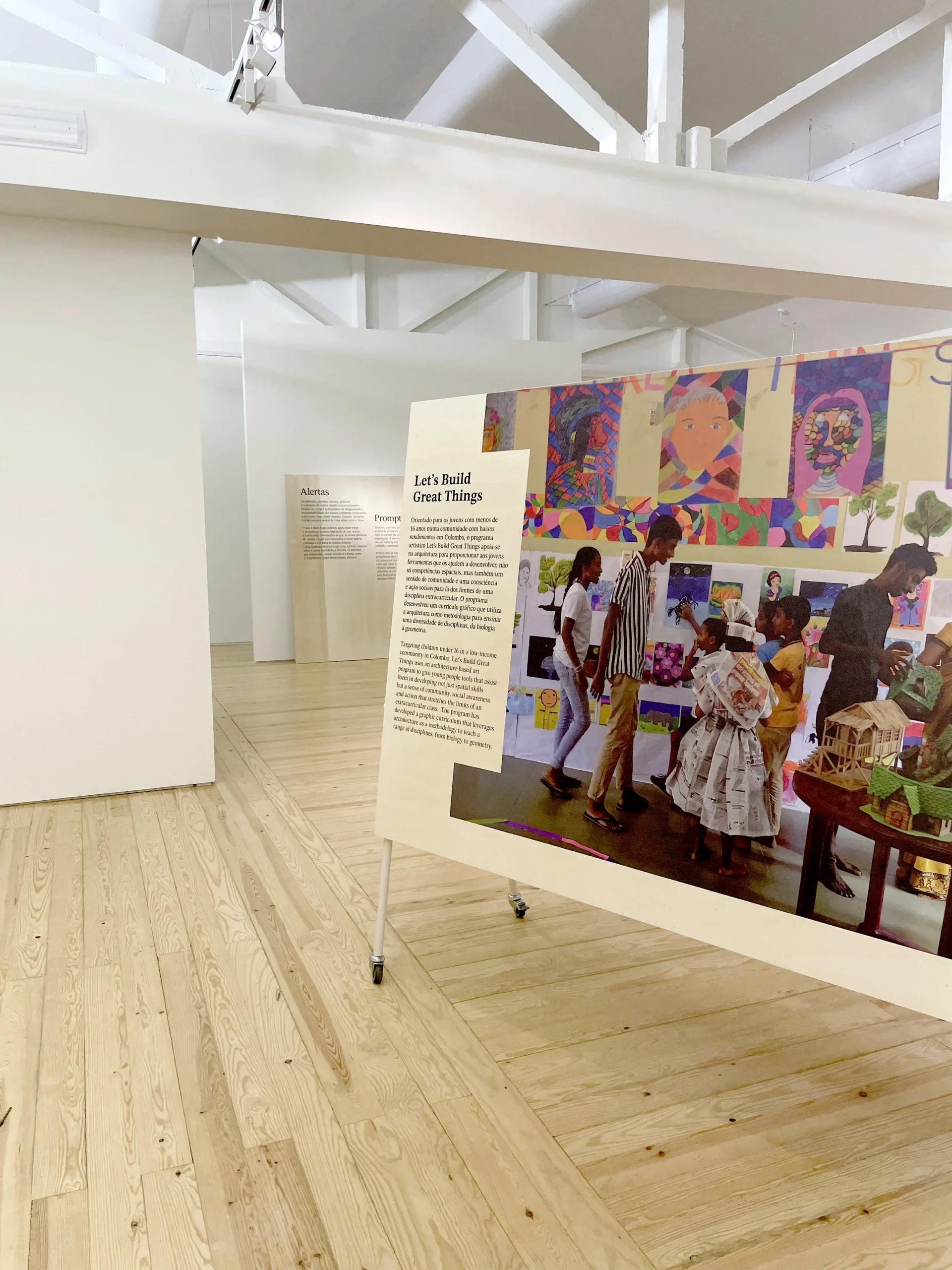
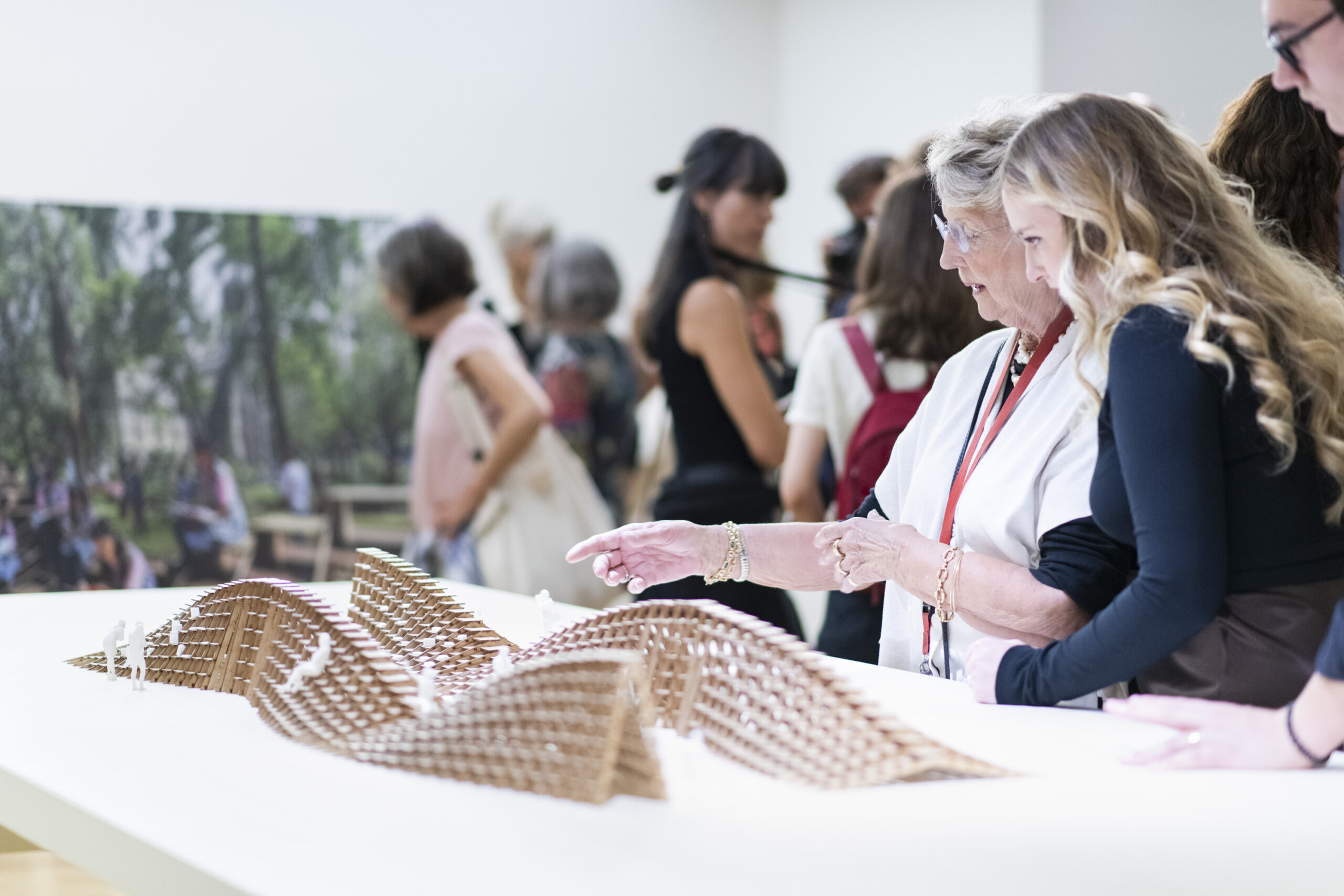
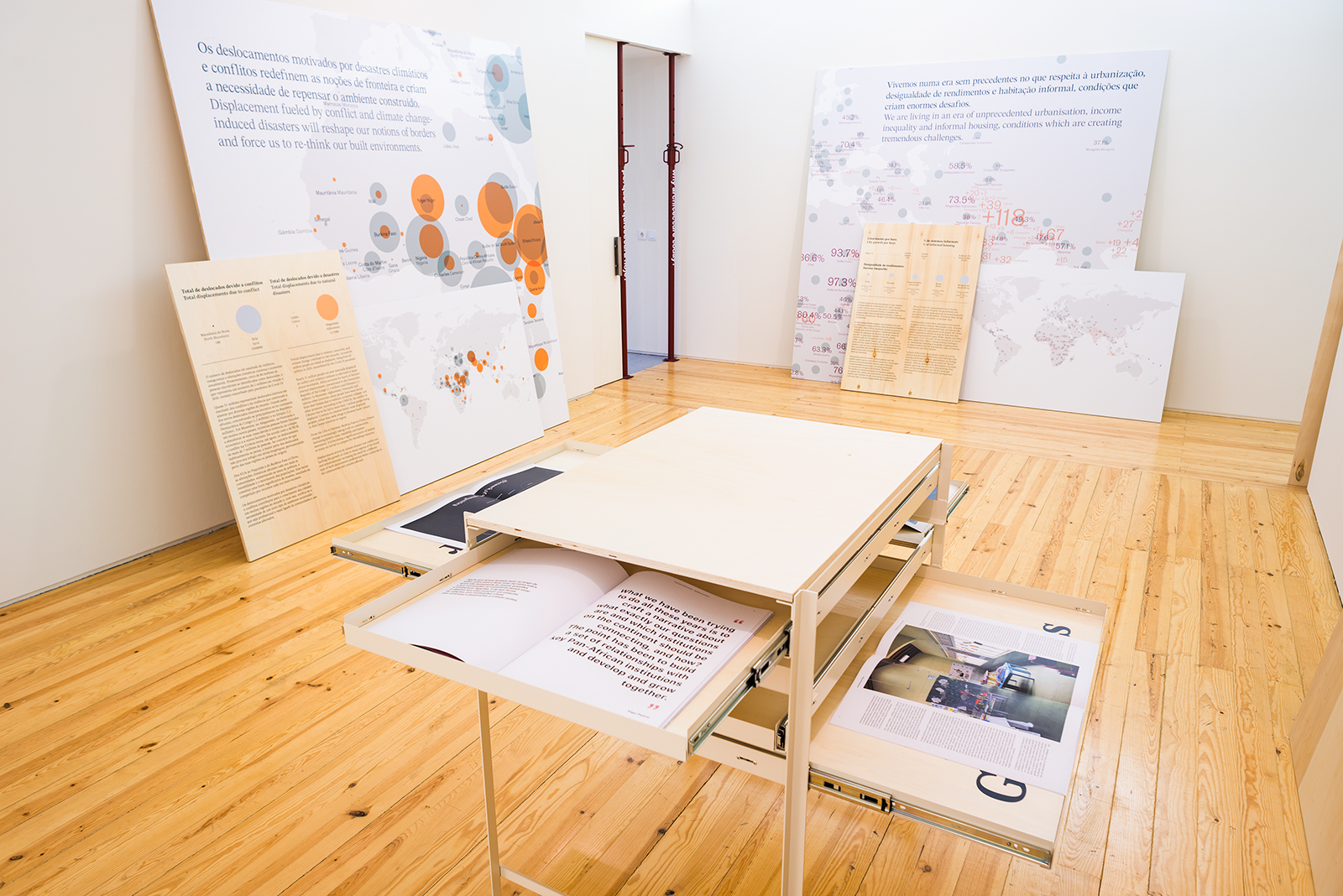
- Multiplicity was presented at Terra, Lisbon Architecture Triennale 2022, and it was essentially an examination of a discipline under real pressure. Architecture was being forced to confront things it could no longer ignore: widening inequality, climate breakdown, pandemics, and a canon that simply doesn’t reflect the world it’s supposed to be working in.
- But it went further than that. The exhibition asked: who actually gets to shape what architecture becomes? Should it stay the exclusive territory of the profession, or should the communities that architecture claims to serve have a say in determining its future too? Multiplicity didn’t pretend to have answers. Instead, it created a platform where those questions could actually be debated, while showcasing practices that pointed toward possibilities nobody had quite considered yet.
- The exhibition was structured in five sections—Agenda, Hacks, Systems, Production, and Canons—and it brought together practitioners, activists, and thinkers working at different scales across different parts of the globe. Community-led spatial interventions. Hybrid production models tackling housing shortages. The projects made it clear that architecture is evolving, expanding beyond the traditional limits of site and brief, beyond client and object, into systems, politics, and culture.
- The argument was straightforward: architecture is no longer singular. It’s contested now. It’s plural. And it’s increasingly being shaped from outside the profession itself. Through video, models, drawings, and live debate, the exhibition traced this shift—tracking a discipline trying to reinvent itself in real time.
- The exhibition consisted of 18 case studies presented as folios: Let’s Build Great Things, Dark Matter University, African Centre for Cities, Omar Yousef, Friendship Bench, Better Living Challenge, Mohalla Clinics, Community Fridges, Casa do Vapor, Bookworm Pavilion, Plug-in House, Wiki, and Free House. It used photography, architectural models, audio and film, graphics and materials in multiple mediums to tell these stories.


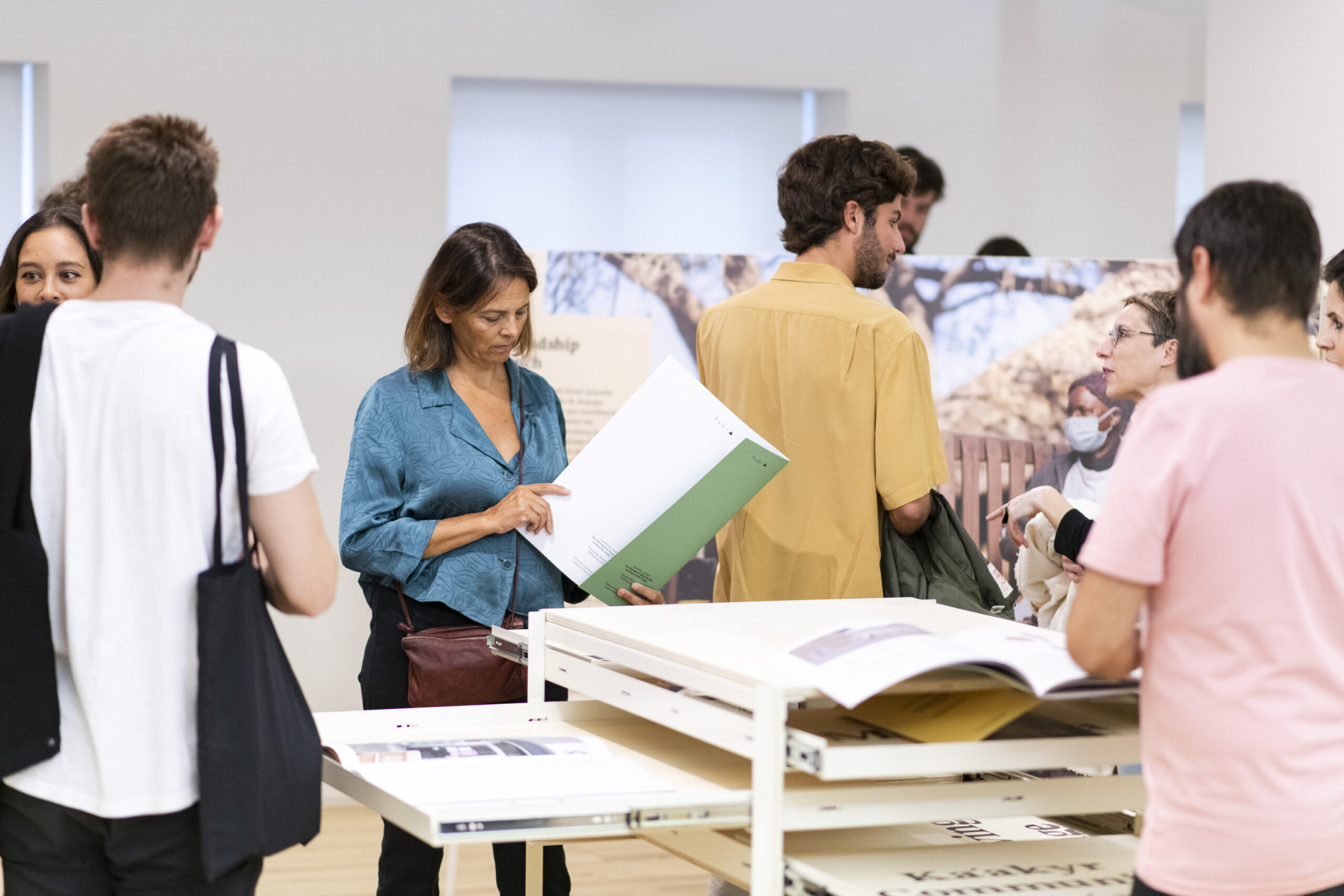
- Multiplicity benefited from the Lisbon Triennale’s loyal crowd. Coming out of the pandemic, it drew steady numbers—people who actually lingered, read the materials, got into conversations, engaged with what was on show rather than just drifting through. That kind of attention mattered.
- The press response was messier. Several reviews were supportive; others were critical. One critic rejected the central argument outright, insisting that architecture wasn’t actually failing its social and civic obligations in the way the exhibition suggested. Another took aim at the second-floor location, arguing that the relative inaccessibility undermined the whole premise. A third dismissed it as text-heavy, making the point that exhibition-making belongs to artists and designers, not editors.
- Multiplicity’s mixed reception actually proved something useful. It exposed just how contested architecture has become, and how little agreement exists about what it’s supposed to do, who it’s meant to serve, and how you’d even know if it was working.
- It also made clear that disciplinary defensiveness is still very much alive, and that exhibitions that speak mainly to insiders risk narrowing their own relevance.
- That realisation crystallised something for us. We became determined to focus on work that breaks down boundaries rather than reinforces them. It’s what directly shaped the thinking behind SHIFT—a tool designed to sidestep exhibition culture’s inward gaze altogether.
Alex Romer
African Centre for Cities
Collectivo Warehouse
Dark Matter Laboratories
Dark Matter University
Friendship Bench
Hunnarshala Foundation
Ibasho
Let’s Build Great Things
Nudes
Omar Yousef
People’s Architecture Office
Summary
Torolab
Sofia Baptista

