
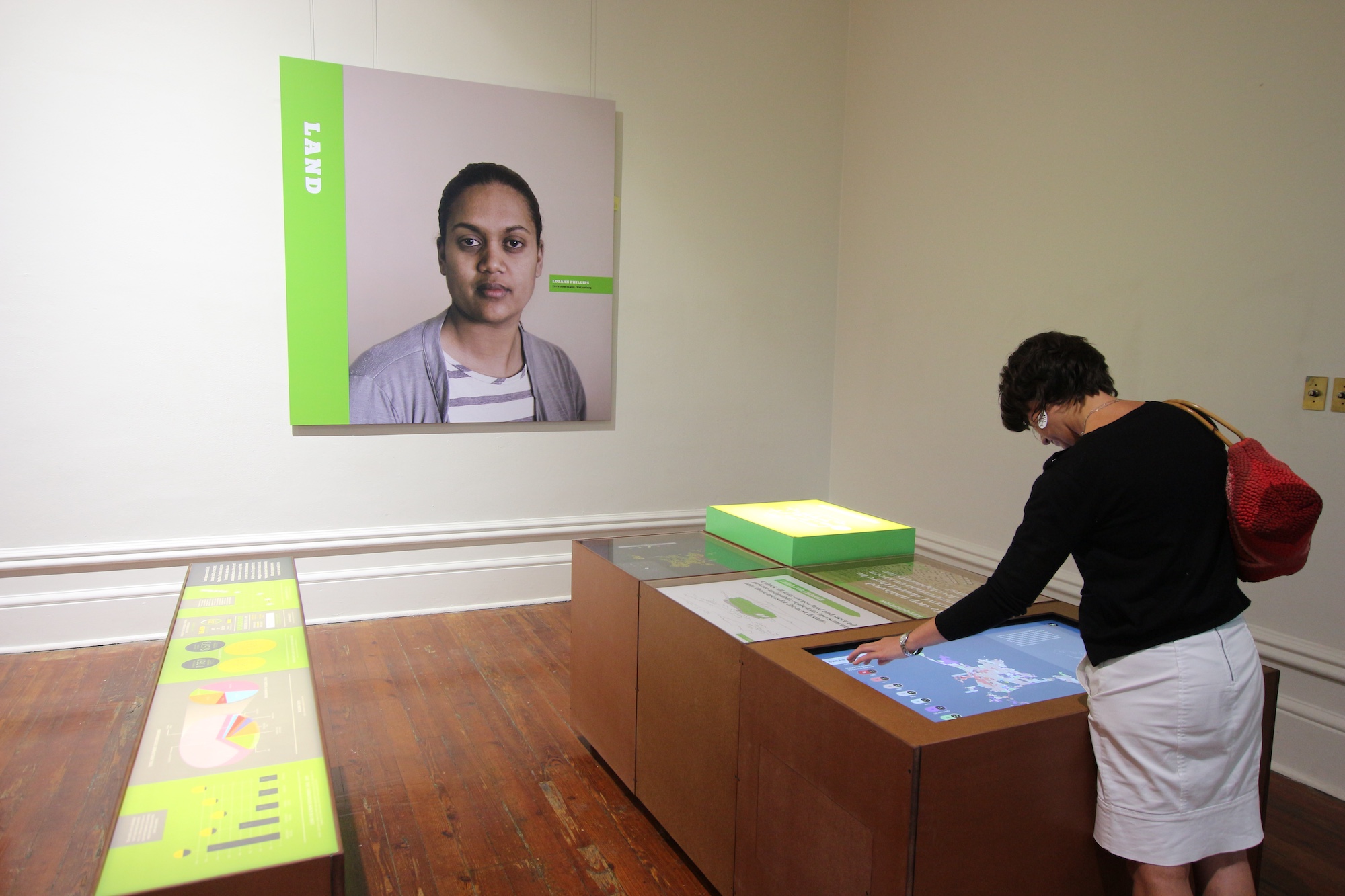
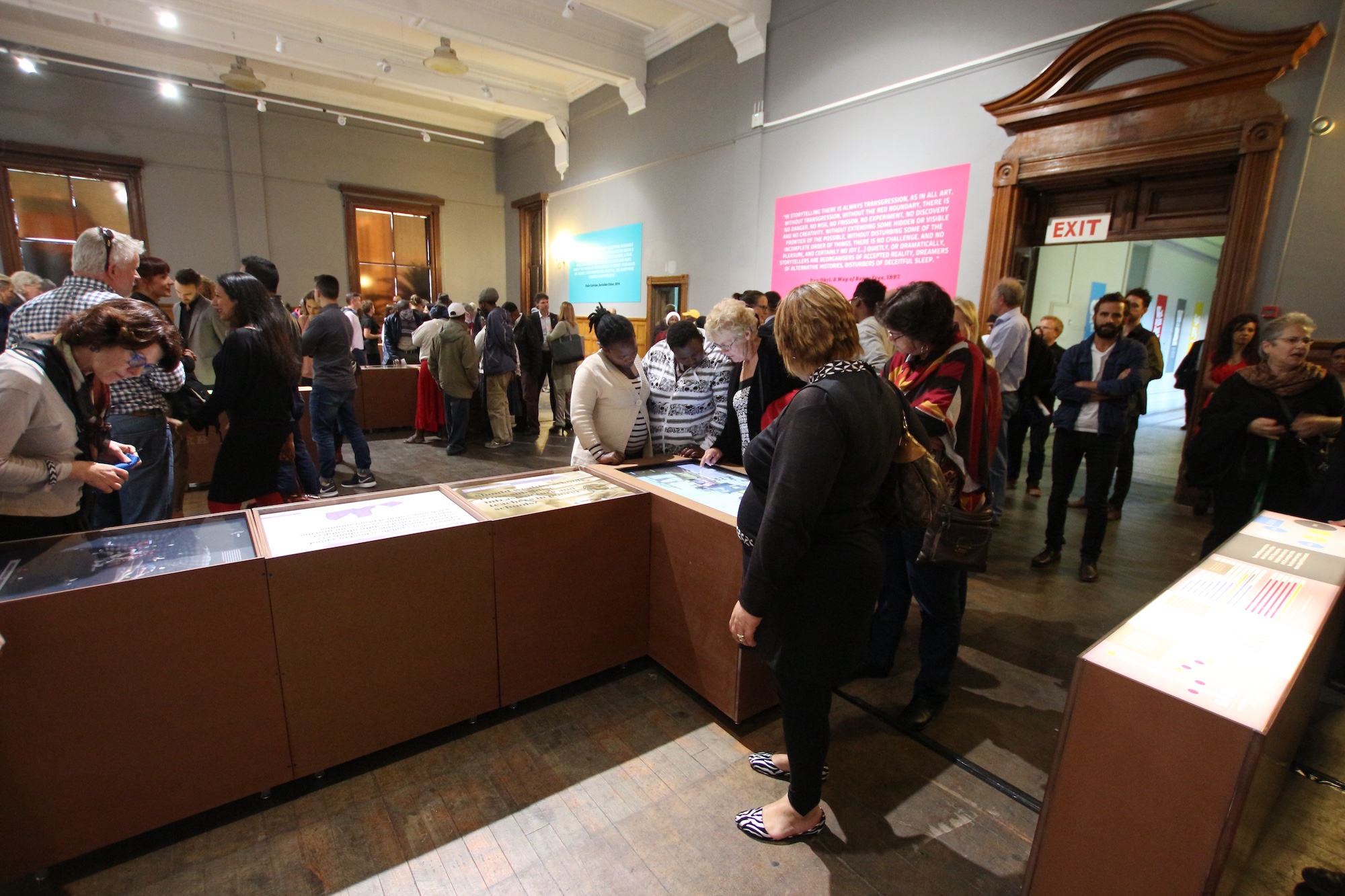
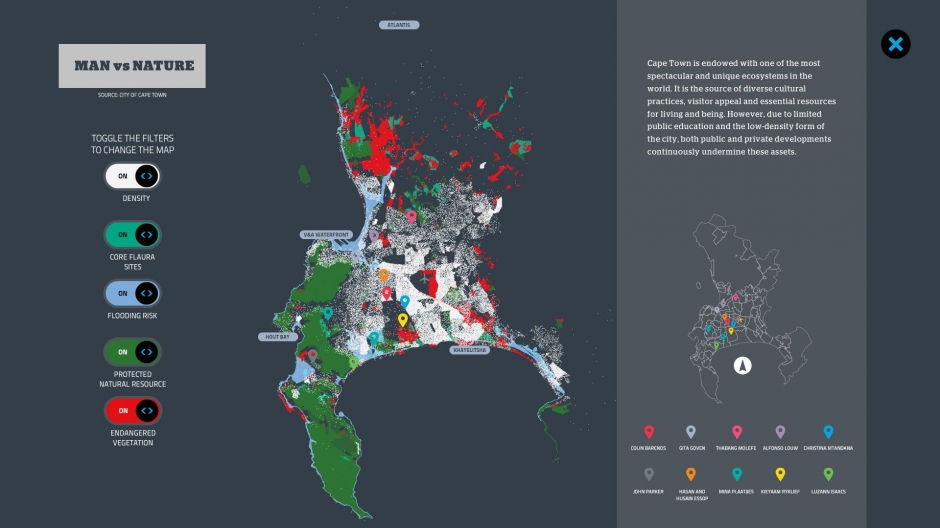
- At its core, City Desired confronted Cape Town’s entrenched spatial and socio-economic divides. It focused squarely on the legacies of apartheid—the way they continue to be reproduced through housing, education, health, and infrastructure—while refusing a singular, easy narrative: the one about complete dysfunction and despair that was gaining traction across much of the city’s activist, academic, and political circles.
- Through biographical storytelling, mapping, photography, video, games, and models, visitors were invited to navigate the genuine tensions between division and shared aspiration—to sit with the contradictions rather than resolve them.
- The lives of 11 Capetonians from across the city formed the beating heart of the exhibition and everything it contained. They cut across the city’s generational, income, geographical, and social divides, offering genuine insight into the layered complexities of urban life. Christina Mtandana, Gita Goven, Kieyaam Ryklef, Thabang Molefe, Hasan Essop, Alfonso Louw, Luzann Phillips, Husain Essop, John Parker, Colin Barends, and Mina Plaatjies opened their lives to us with an extraordinary generosity. They spent six months engaging with journalists, filmmakers, and photographers, and without that collaboration, the entire project would have been immeasurably diminished.
- This was complemented by The Density Syndicate—a months-long series of studios and workshops bringing together various built environment practitioners to grapple with real propositions for addressing some of the city’s most pressing contradictions: central districts that remain lightly populated, home to the city’s wealthiest residents, whilst the vast majority are packed into an ever-expanding periphery struggling with intractable infrastructure deficits.
- “Serious Fun” was another initiative—a citywide series of gaming activities designed to get residents across the city to genuinely consider its contradictions, opportunities, and challenges. These activities pushed the exhibition outward, transforming it into something altogether more active: a forum for real experimentation around urban futures.
- The aim was never consensus, but clarity. We actively sought to shift public discourse beyond polemic and create a space where the city’s interconnected fate could be confronted directly—without evasion, without easy answers.
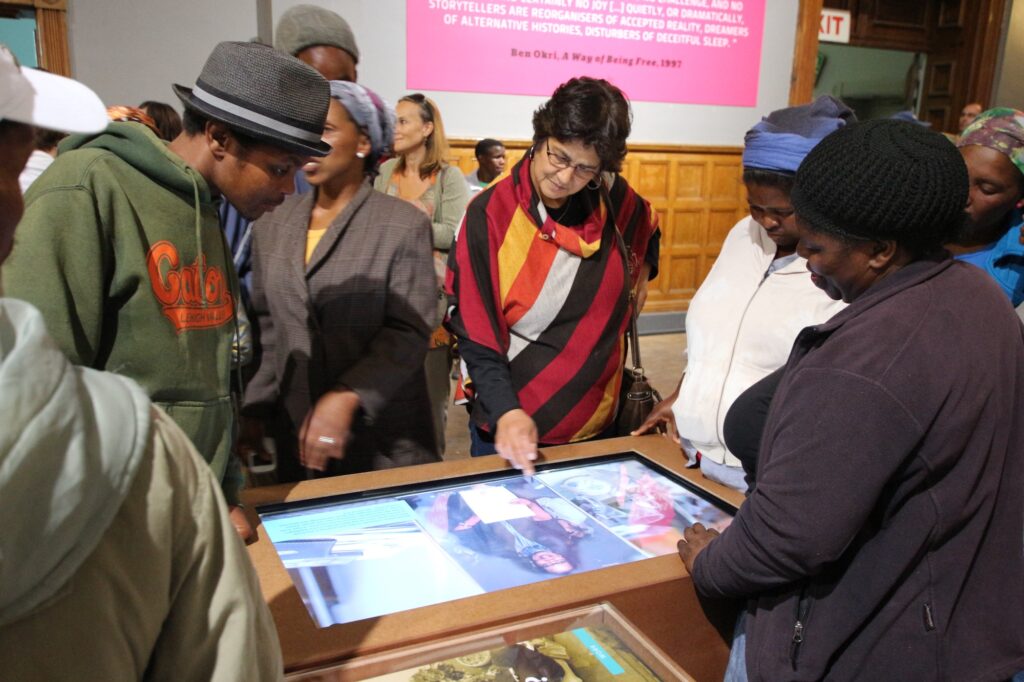
- The exhibition’s opening night drew an unusually wide cross-section of the city. Politicians stood alongside activists; academics spoke with designers and architects; schoolchildren moved between philanthropists and practitioners. It was often tense, sometimes genuinely uncomfortable. But people who would otherwise never have had the chance to interact did exactly that—they shared stories, they moved through the exhibition together, in an evening that felt almost improbable in a city so thoroughly defined by hardened social, economic, and political silos.
- The project marked a turning point for the African Centre for Cities approach to public-facing work, and it established a deliberately experimental, multimedia format that would shape Cityscapes and subsequent projects.
- The exhibitions’ Density Syndicate left the legacy of a series of concrete proposals that extended beyond critique and pointed toward alternatives.
- The primary lesson from City Desired was that observation and commentary without clear propositions do not shift very much. Analysis alone is insufficient.
- It also clarified something essential: the real value of engaging the city across professions, forms of expertise, and interests—and of defining our work as something altogether more expansive than simply “urban”. The most productive ground lay in the in-between: those tense, genuinely generative spaces where academy, policy, activism, community, and cultural practice collide. We recognised the need for a practice that resists neat disciplinary labels. When conditions are constantly shifting, rigid identities can only constrain the very exploration that actually matters.
Anna Taylor
Andrew Chapman
Anton Cartwright
Bekezela Phakathi
Brendon Bosworth
Caroline Skinner
Clare Herrick
Clifford Shearing
David Schmidt
Don Holloway
Don Pinnock
Doung Jahangeer
Gareth Haysom
Gavin Miller
Gina Ziervogel
Gordon Pirie
Henri Ernstson
Herrie Schalekamp
Ithra Najaar
Ivan Turok
Jane Battersby-Leonard
Janine Stephen
Kim Gurney
Laura Malan
Lee Middleton
Leonie Joubert
Liza Cirolia
Marcela Guerrero Casas
Marlene Joubert
Maryam Waglay
Megan Tenant
Mercy Luthango-Brown
Michal Rahfaldt
Nasima Badsha
Natasha Primo
Nico Cloete
Nina Calaghan
Oliver Kruger
Paul Court
Rike Sitas
Robert McGaffin
Saul Roux
Sean O’Toole
Sue Parnell
Sydelle Willow Smith
Tambu Ndlovu
Tanner Methvin
Warren Smit

