
#2
Bureaucratics
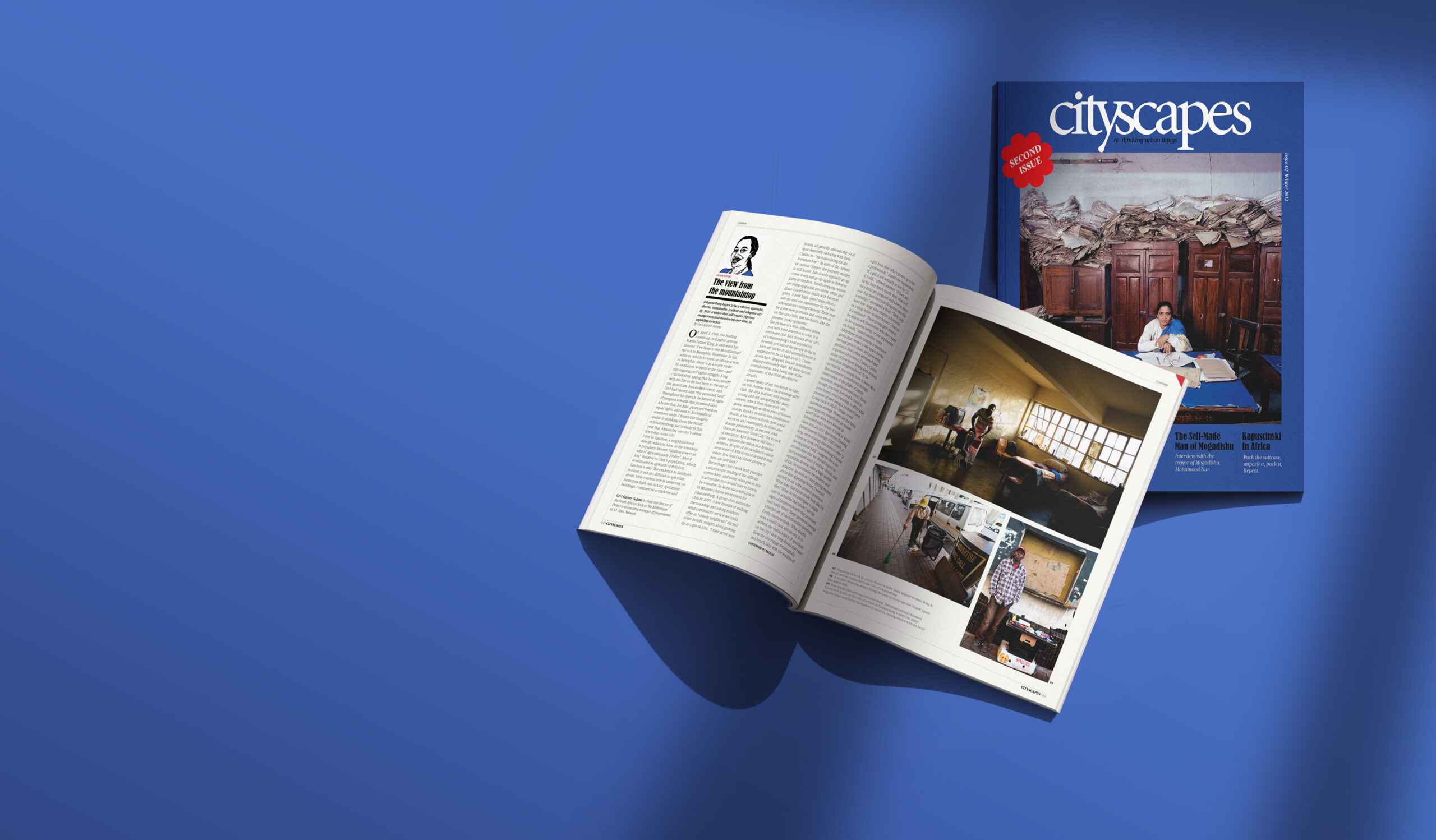
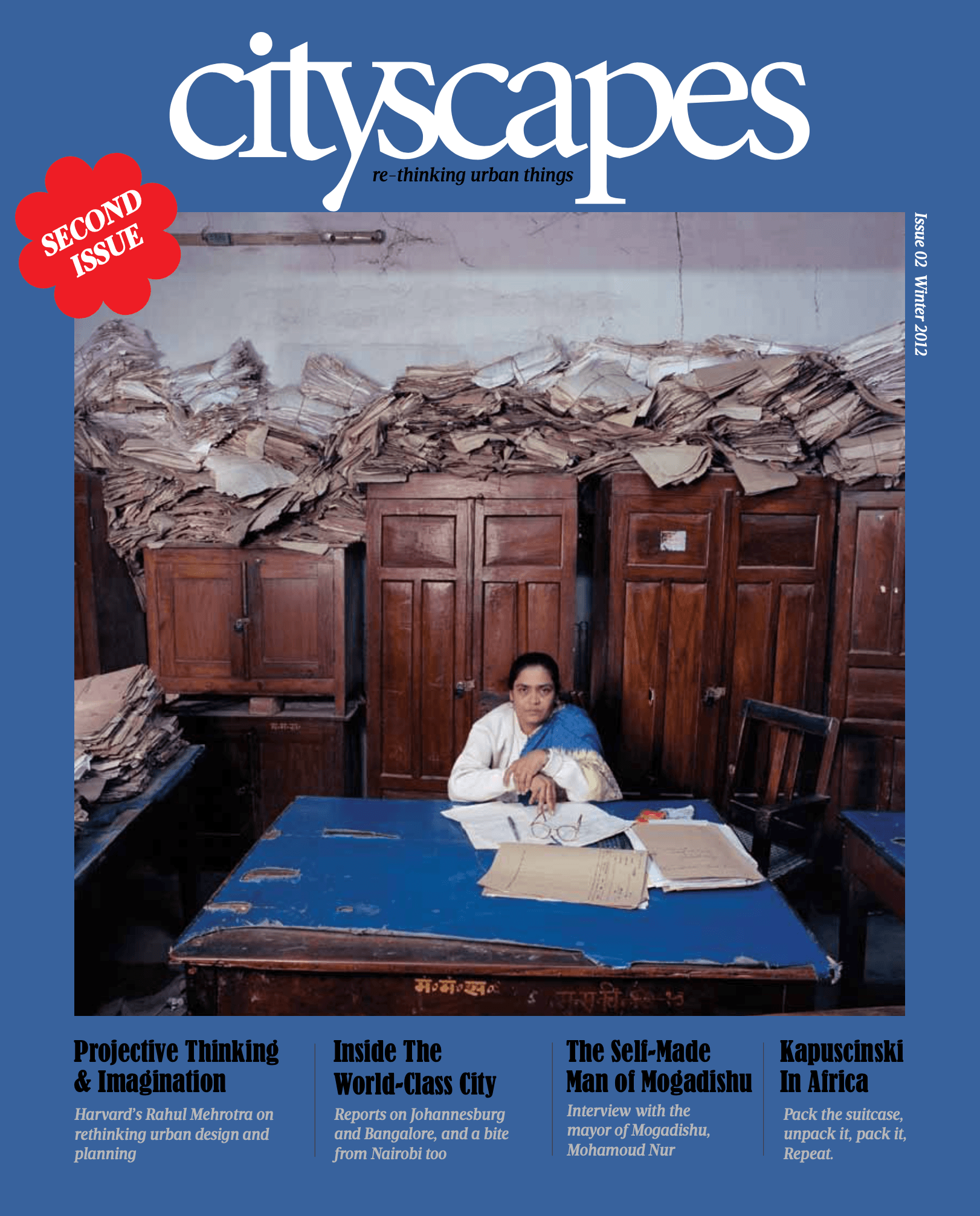
issue #2 turned its attention to bureaucracy and urban government. Featured an interview with then mayor of Mogadishu, Mohamud Noor; and a sharp, laugh-out-loud reflection on the newly launched Konza City by the late Binyavanga Wainaina.
Cityscapes is a continuous adventure in trying to decipher the emergent cities of the global south. The magazine understands that with a constant overflow of dynamics and meaning, it is best to operate in the zone of juxtaposition, contrast, typology, irony and creative critique. In this issue we rub two contrary dynamics—bureaucratic inertia and world-class aspirations—against each other to open up worlds of dreams, banality, ambition, administrative lumber and discursive replays.
City governments across the world with any kind of self-regard are bullishly trying to reimagine and rebrand themselves in order to convince hordes of (mythical) investors to choose their city above all others. Despite the conceit of the underlying premise—that the fortunes of places depend on the gratuity of external actors—it is astounding how pervasive the notion of being “world-class” has become. It is the grammar of choice for city builders just about everywhere. As critics correctly point out, this often sets in train all manner of thoughtless and unjust policies and interventions that paradoxically undermine the prospects of unearthing the unique alchemy that potentially makes a city distinctive and compelling, essentially, at ease in its own skin.
At the same time, it is equally interesting to observe how kitsch ”attempts to “brand” and “project” world-class cityness also create a variety of openings for alternative narratives and movements to emerge to not only contest dominant representations, but equally project alternative visions into the global public sphere. Public contestations—for example, over toll roads, lack of toilets, police brutality, public access—are increasingly defined by these dramatic juxtapositions that all lay claim to the soul and futures of their cities.
However, the most grounding reality of the day is undoubtedly the pervasive reproduction of public bureaucracies. Whether a city projects to be world-class or not, every day most of its inhabitants depend of vast socio-technical and administrative systems to guarantee life, mobility, safety and pleasure. Yet, in all of the fashionable jargon about “resilient” or “competitive” or “liveable” cities, we tend to lose sight of the millions of people who work, and truly work, the bureaucracies. We trust that our attempt to bring these forces and dynamics to life in this instalment of Cityscapes will resonate.
Good reading…
When transport becomes political
Gordon Pirie
Reconnecting planning with urban health
Jason Coburn
Fast food takeover of sub-Saharan Africa
Leonie Joubert
A clearer agenda for urban development
Kerwin Datu
An urban future for 7 billion earthlings
Camaren Peter
China’s model industrial park in Zambia
Kevin Bloom
Luanda, Jakarta, Dar es Salaam, Harare, Lagos, Johannesburg
City Reports
Where art meets journalism
A group of photographers take a road trip
You have a good CV
Djo Tunda wa Munga on film and trauma
Travels with Kapuscinski
On journalism, brotherhood and espionage
Jan Banning
Gautam Bhan
Kevin Bloom
Lard Buurman
Jason Corburn
Kerwin Datu
Amy Faust
Allan Gagichi
Claudia Gastrow
Hemangini Gupta
Kim Gurney
Dina Inds
Carlos Jiménez
Leonie Joubert
Geci Karuri-Sebina
Rahul Mehrotra
Djo Tunda wa Munga
Emeka Okereke
Camaren Peter
Gordon Pirie
Jeremy Sampson
Delwyn Verasamy
Binyavanga Wainaina
Rasna Warrah

