
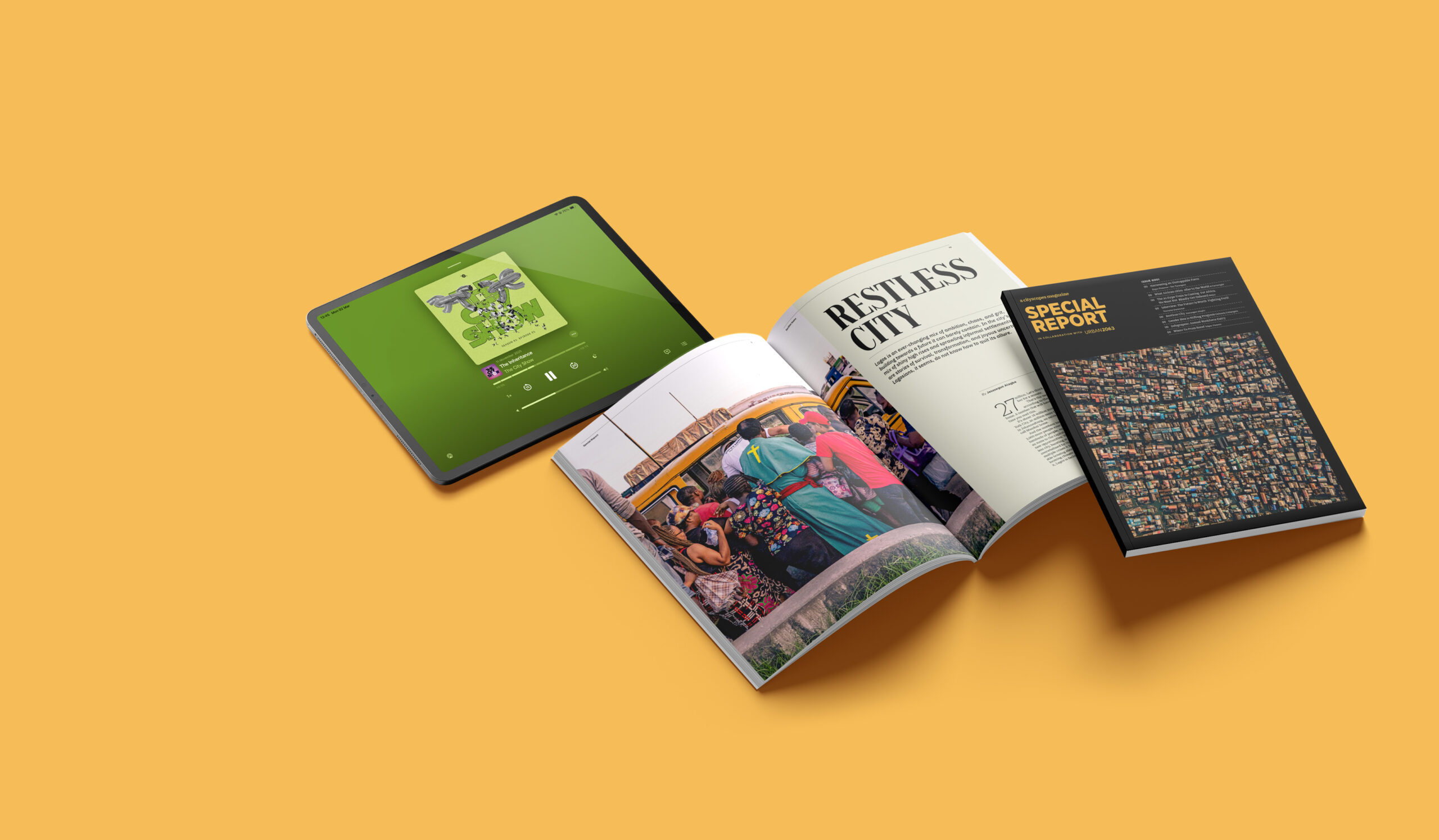
- In 2025, we worked with Urban2063, a coalition of 13 organisations convened by our long-term partners at the African Centre for Cities. Every member organisation in the coalition is working toward the same thing: equitable and sustainable urbanisation globally.
- The timing was deliberate. The work targeted the year-long series of activities building up to the G20 Summit, which South Africa hosted in 2025—the first time the summit had ever happened on the African continent. The objective was straightforward: make sure African urban realities weren’t treated as an afterthought, but as structural to economic growth, to infrastructure finance, to climate response, to social stability. The core message was simple: cities will be integral to determining the future of African nations. That needed to be front and centre.
- The work itself combined several strands. There were eight policy briefs. A 90-page Cityscapes magazine special report. A three-episode scripted podcast series. A series of webinars. Coordinated media work designed to widen the conversation about cities and the policy debates that sit at the heart of the G20 Summit.
- The campaign’s various components landed well. With support from our media partners, the work generated real coverage and helped sharpen public attention around cities and their role in Africa’s development trajectory—at least for a while.
- But the central objective didn’t materialise. The coalition never managed to get the core recommendations from the policy briefs into the G20 Summit’s final communiqué. The document fell short of formally recognising cities as foundational to future policy, to financing frameworks, to multilateral negotiations about Africa’s development.
- The outcome revealed a familiar constraint: evidence and visibility don’t automatically translate into institutional action. Getting influence at that level requires something different—longer-term political alignment, sustained diplomatic engagement, leverage within negotiation processes that run far deeper than anything a public-facing campaign can reach.
- The project made another basic lesson absolutely clear. Short-term interventions rarely shift entrenched policy positions. Structural change demands something altogether different—sustained engagement, coordinated strategy, presence across multiple negotiation cycles, not just at the flashy moments when everyone’s paying attention.
- It also underlined why coalitions like Urban2063 matter so much. When advocacy is fragmented, its impact weakens. But when messaging is unified, grounded in solid evidence, and carried collectively, it creates far greater leverage in multilateral spaces.
- Our role within that ecosystem became clearer too. We’re not the negotiators. We’re not convening states. What we actually do is distil complexity, align arguments, and articulate a clear, disciplined narrative that builds and strengthens the collective voice. That’s where our value lies.
Waziri Mainasara Abubakar
Teshome Adugna
May al-Ibrashy
Jesusegun Alagbe
Manuel de Araujo
Talib Ahmed Bensouda
Nzinga Biegueng Mboup
Anton Cartwright
Chilando Chitangala
Jakkie Cilliers
Luísa Dias Diogo
George Kibala-Bauer
Wangui Kimari
Alize le Roux
Emmanuel Makaka
Trevor Manuel
Obadiah Mungai
Nolita Thina Mvunelo
Gathanga Ndungu
Zeph Nhleko
Mildred Musonda Nkole
Regina Opondo
Edgar Pieterse
Anaclaudia Rossbach
Chaltu Sani
Geci Sebina-Karuri
Will Senyo
Bright Simons
Thembisile Simelane
Oumar Sylla

